
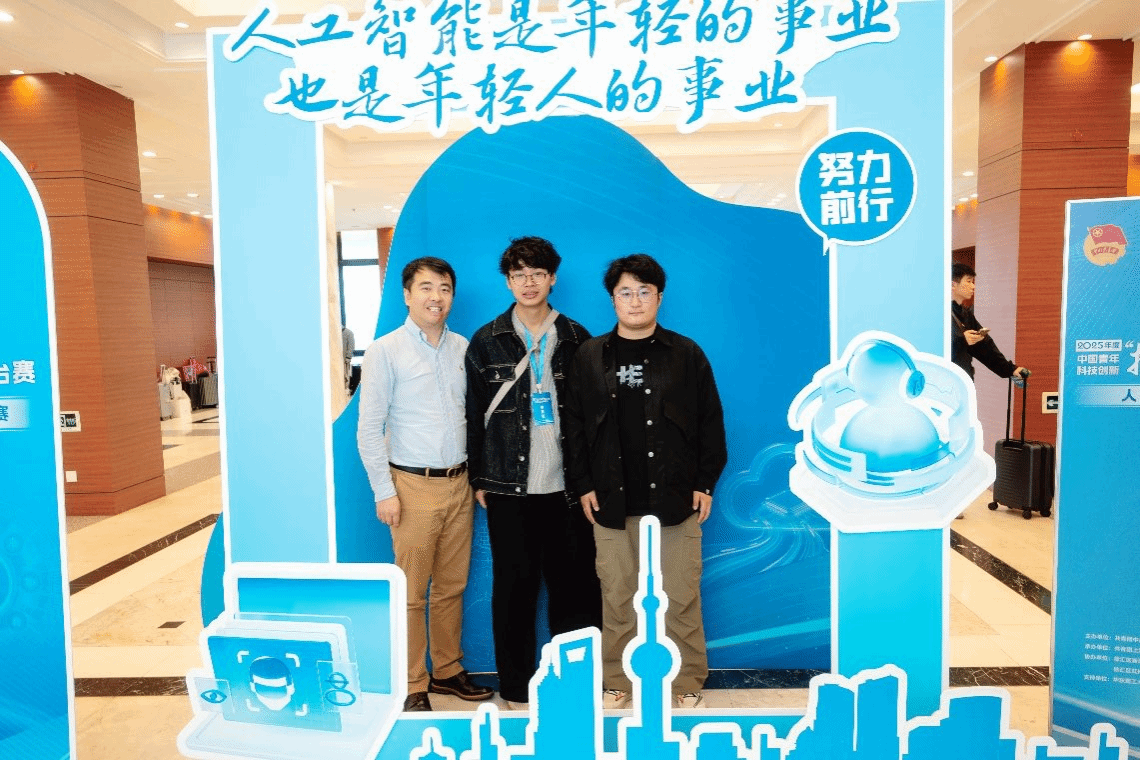
The“Carbon-Purifying Membrane Magic”team, led by Fan Xingshuo and Wang Shiling, two UG students majoring in Energy and Chemical Engineering at DUTPJ, won the National Grand Prize in the“challenge-based competition” track of the 19th“Challenge Cup”National College Students Extracurricular Academic Science and Technology Works Competition. Their project, Machine Learning-Based Predictive Models for the Gas Separation Performance of Microporous Membranes, was developed by a team largely composed of students from non-AI majors. By bringing AI methods into chemical engineering research and targeting key bottlenecks in industrial R&D, the team demonstrated the vitality of interdisciplinary learning and student-led innovation in serving national strategic needs.
For years, the development of membrane materials has been constrained by long design–synthesis–testing cycles and high experimental costs. In particular, the relationship among membrane structure, gas properties, operating conditions, and separation performance remains difficult to predict accurately. Systematic AI-driven R&D workflows for gas separation membranes are still emerging. Focusing on gas membrane separation, an important technology for Carbon Capture, Utilization, and Storage (CCUS), the project addresses the limitations of traditional trial-and-error development.
The team integrated machine learning with membrane material research and developed a multimodal framework that links molecular structure with physicochemical conditions, together with a dual-space knowledge distillation strategy. They also built an interactive prediction and reasoning platform based on Qwen3-30B, enabling rapid performance prediction and decision support. The project is closely aligned with industrial needs and offers a practical student-led approach to the digital transformation of the energy and chemical sector under China's dual-carbon goals. As team leader Fan Xingshuo said, “Our original goal was to use interdisciplinary knowledge to solve real industrial problems and bring laboratory research closer to frontline application.”
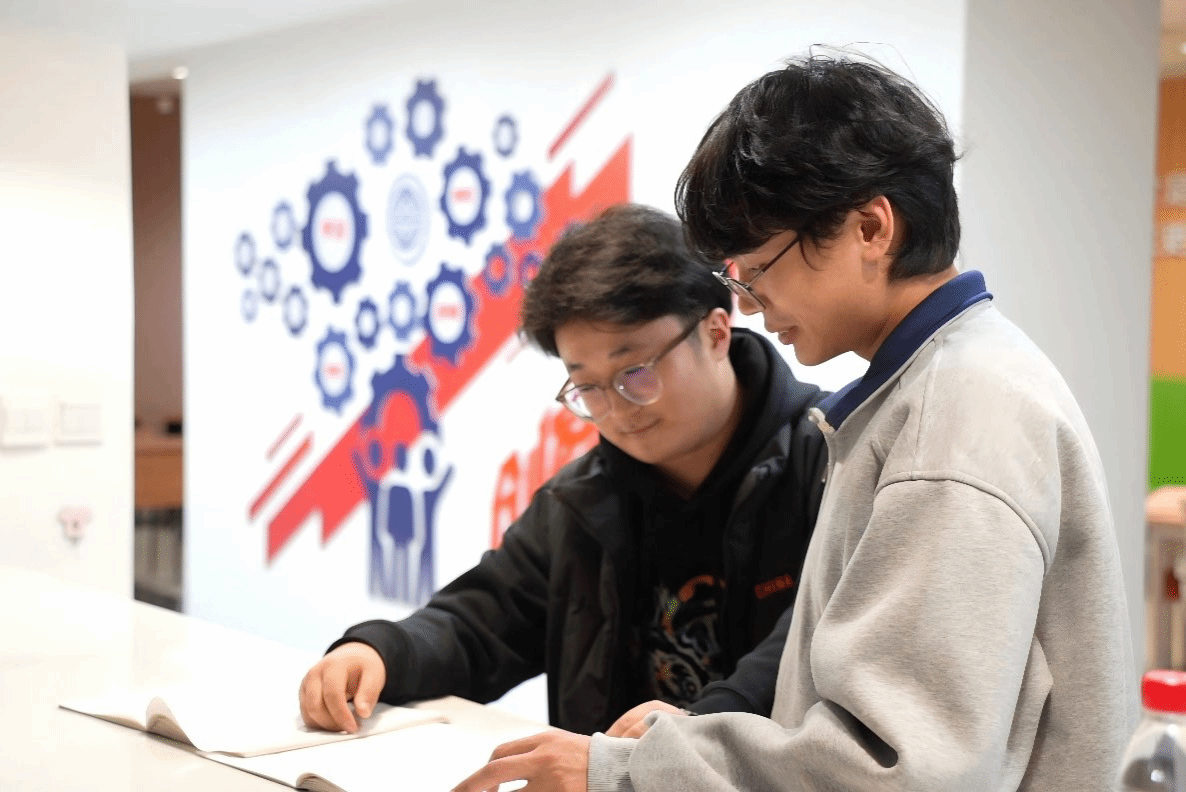
DUTPJ has continued to promote interdisciplinary education and provide systematic support for student innovation and entrepreneurship. Team members rapidly build the skills needed for cross-disciplinary research with the help of a joint supervision group across disciplines set up by DUTPJ and School of Chemical Engineering, Ocean and Life Sciences.
At the beginning of the project, the students were still struggling with thousands of lines of code. Over time, they learned to use tools such as PyTorch Lightning for model training and gradually shifted from a single-discipline mindset to systems-level interdisciplinary thinking. During the project, the team summarized its findings and published a related paper in a Q1 SCI-indexed journal.
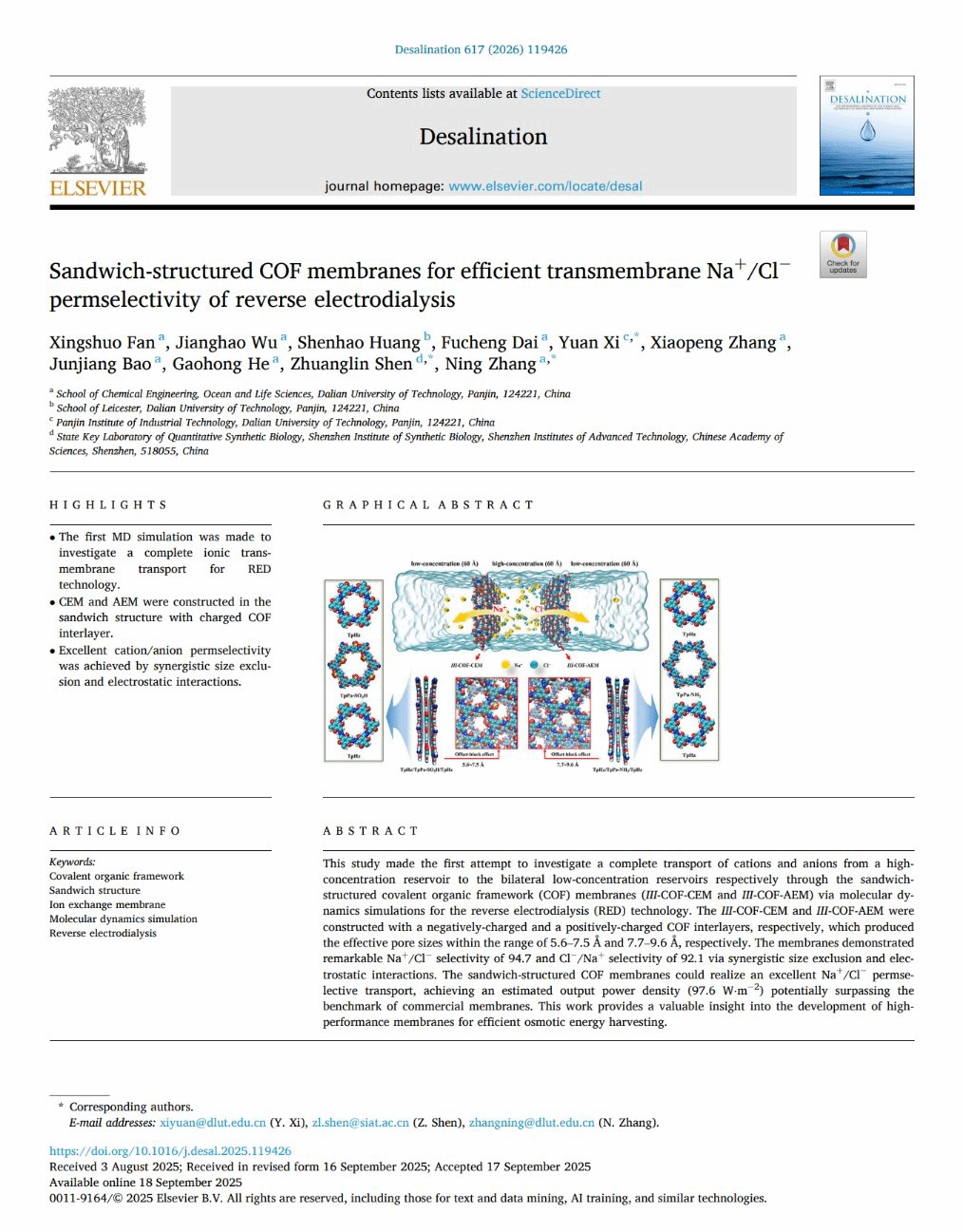
Related paper: https://www.sciencedirect.com/science/article/abs/pii/S0011916425009026
With this experience, Fan Xingshuo and Wang Shiling were recommended for PG admission without taking the national entrance examination. They will continue their studies at University of Chinese Academy of Sciences, and the School of Information and Dalian University of Technology, respectively. For the team members, “disciplinary boundaries are meant to be broken” has become more than a slogan—it is a shared lesson from their research journey.
Published on 5 May 2026

Address: No.2 Dagong Road, Liaodong Bay New District, Panjin City, Liaoning Province, P.R.C., 124221
Tel: +86-427-2631925 +86-427-2631933
Email: pjdut@dlut.edu.cn
Fax: +86-427-2631928